Click here visit our Research-supported educational program for children
March 4, 2026
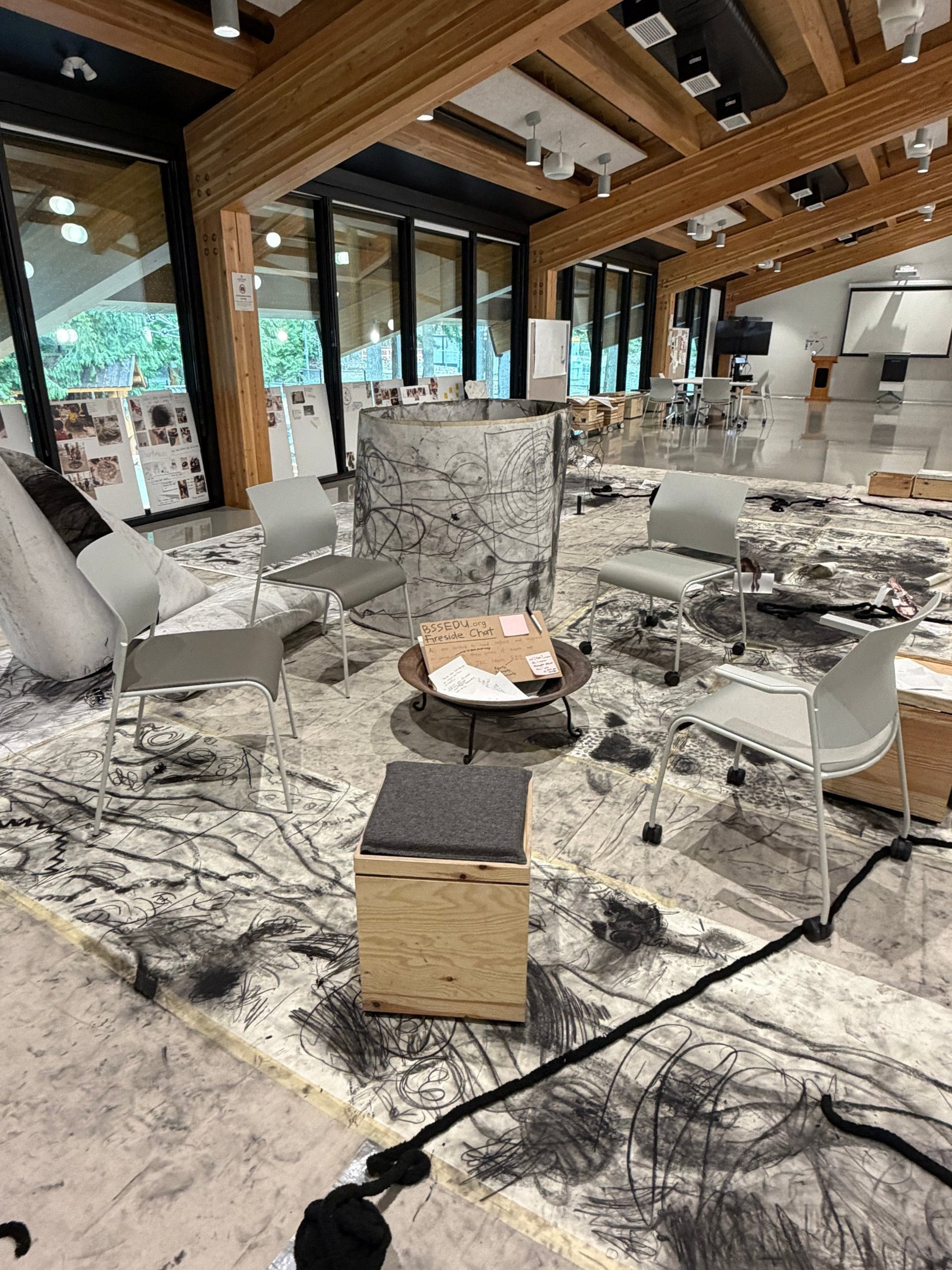
Fireside Chat Summary
Topic: TRC meets EDI -
Living Well in Relationality within a Glocal (Global + Local) Context
The session check-in question:
What does "When in Rome, do what the Romans do" mean to you when relating to the topic of living well in relationality within a glocal (Global and Local) context? Share your thoughts below!
Summary
This faculty gathering created space for collective reflection on how the Truth and Reconciliation Commission (TRC) Calls to Action and Equity, Diversity, and Inclusion (EDI) commitments intersect through the practice of relationality. Guided by Building Stewardship Spirit’s commitment to learning through dialogue and community, participants explored what it means to live well together in a world that is both deeply local and increasingly interconnected.
The conversation began by reflecting on the idea of the “glocal,” a blending of global and local realities. Participants discussed how people move across cultures, communities, and institutions, and how this movement invites deeper awareness of the relationships and responsibilities that shape our presence in different spaces. Living well relationally was described as an ongoing practice of learning how to engage respectfully with the places and communities we enter.
Participants examined common phrases such as “when in Rome, do as the Romans do,” considering how these ideas shift when viewed through lenses of power, privilege, and colonial histories. The discussion highlighted the importance of approaching new cultural contexts with humility, attentiveness, and reciprocity, recognizing that meaningful engagement requires more than observation. It requires relationship.
From this perspective, the group explored the complexities of learning from cultural practices while avoiding appropriation. Participants reflected on how authentic understanding grows from relationships built over time rather than from quick or surface level encounters with cultural knowledge. Intentional engagement, listening, and respect for community protocols were identified as essential elements of relational learning.
The dialogue also addressed the responsibilities educators carry when engaging with Indigenous knowledge and perspectives, particularly in response to the TRC Calls to Action. Participants acknowledged the challenges educators may face in navigating this work while emphasizing that integrating Indigenous ways of knowing is not simply an addition to curriculum. It is part of a broader commitment to relational accountability and ethical engagement.
Throughout the gathering, relationality emerged as a guiding principle that invites educators to move beyond performative gestures toward practices grounded in care, humility, and ongoing learning. Participants reflected on how educational spaces can become places where relationships, trust, and community dialogue shape how knowledge is shared and understood.
The session concluded with a shared recognition that responding to TRC and EDI commitments is an ongoing journey of learning together. Participants expressed interest in sustaining these conversations and deepening their collective practice of relational engagement in both local and global contexts.