Click here visit our Research-supported educational program for children
April 8, 2026
Fireside Chat Summary
Topic: TRC meets EDI - The Colonial Hierarchy and Order Behind EDI
Online Engagement check-in question:
What situations have you been in that sustain the idea that human beings reign supremacy over others?
Engage more with our regular Fireside Chat members here in our Padlet:
Summary
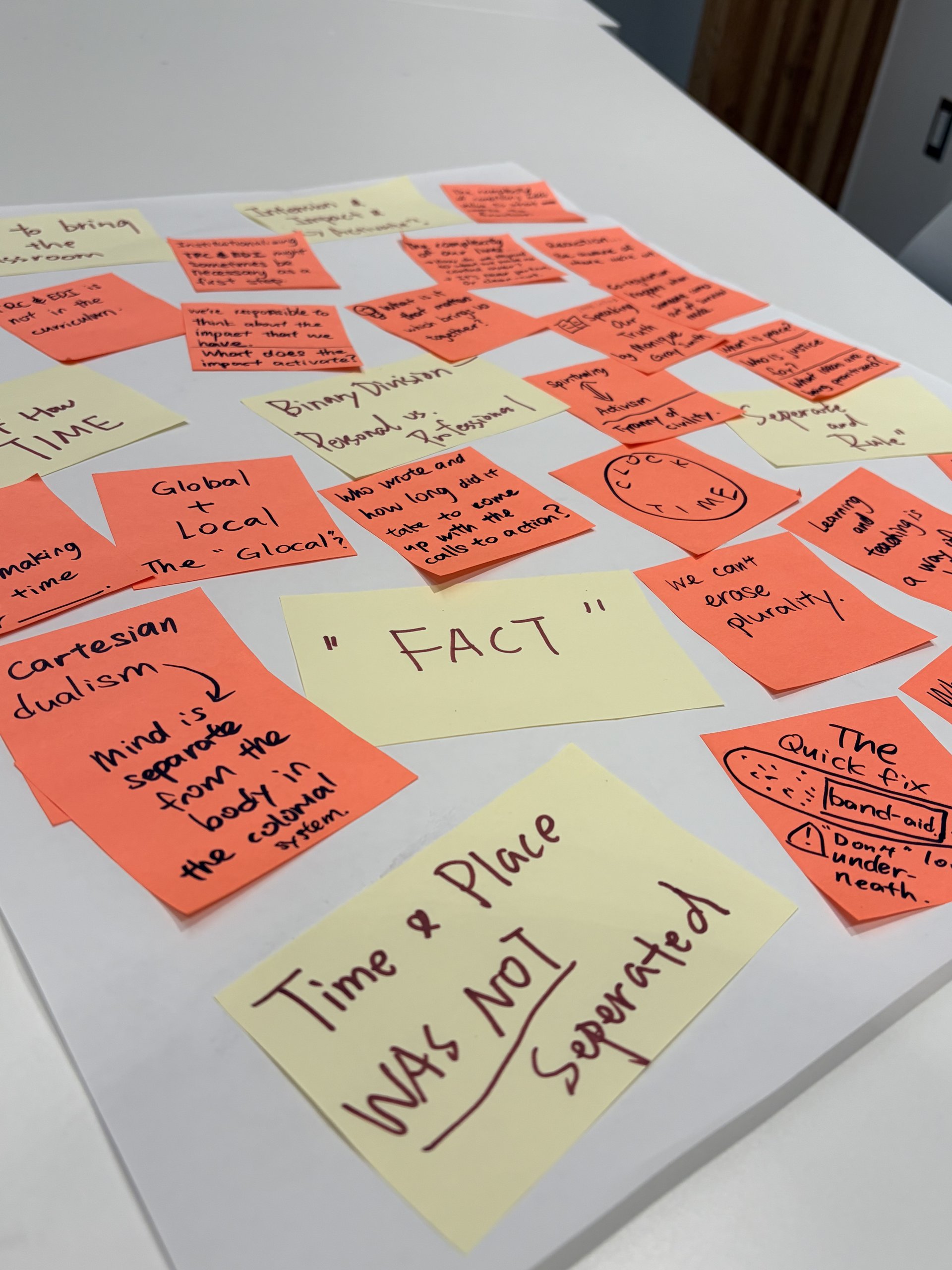
This gathering brought participants together in preparation for an upcoming conference session exploring the intersections of the Truth and Reconciliation Commission (TRC) Calls to Action and Equity, Diversity, and Inclusion (EDI) through a critical examination of colonial hierarchies and systems of order. In alignment with Building Stewardship Spirit’s relational approach, the discussion centered on how these systems shape ways of thinking, being, and engaging with others.
The conversation began with reflections on gratitude, reciprocity, and relational responsibility, drawing on teachings that emphasize the importance of treating what is given with care. Participants considered how these principles extend beyond symbolic meaning into everyday actions, including how individuals relate to one another, shared spaces, and the natural world.
Participants explored the tension between individualistic and collectivist ways of thinking, recognizing that both can hold strengths and limitations. The discussion examined how colonial hierarchies often position humans above other beings while also creating divisions among people. These dynamics were understood as shaping not only social structures but also internalized ways of relating to difference, belonging, and power.
The dialogue also addressed the relationship between thinking and action, with participants reflecting on how awareness alone is insufficient without meaningful follow-through. The group considered how individual and collective responsibilities are interconnected, and how inaction or uncritical participation in systems can contribute to ongoing harm. The influence of group dynamics, including the risks of echo chambers, was also discussed in relation to how ideas are reinforced or challenged within communities.
Amid these reflections, participants acknowledged feelings of uncertainty and concern when engaging with complex global and local issues. At the same time, the concept of radical hope emerged as a guiding thread. Rather than viewing hope as abstract optimism, participants described it as something grounded in practice, relationship, and the creation of intentional spaces for dialogue. Small, relational spaces were seen as holding the potential to influence broader systems over time.
The conversation also explored the challenges of implementing EDI initiatives within institutional settings. Participants reflected on how efforts such as land acknowledgments or diversity requirements can risk becoming procedural or tokenistic when disconnected from meaningful engagement. The group emphasized the importance of critical reflection, intentionality, and emotional presence in ensuring that such practices remain grounded in purpose rather than compliance.
Throughout the discussion, participants returned to the importance of authentic engagement and relational accountability. This included recognizing the ethical complexities of working within institutional systems while seeking to create more just and inclusive spaces. The role of discomfort, tension, and conflict was acknowledged as part of meaningful learning and community-building.
The gathering concluded with a shared commitment to carrying these reflections into both the upcoming conference and ongoing educational practice. Participants emphasized that engaging with TRC and EI work requires continuous reflection, dialogue, and a willingness to act with care, humility, and responsibility within the relationships that shape our collective learning.