Click here visit our Research-supported educational program for children
April 15, 2026
Fireside Chat Summary
Topic: TRC meets EDI - The Performativity of Land Acknowledgements
Online Engagement check-in question:
When was your most recent encounter with Land Acknowledgements? How was it done?
Engage more with our regular Fireside Chat members here in our Padlet:
Summary
This Fireside Chat invited participants into a reflective dialogue on the role of land acknowledgments within educational and community spaces. Grounded in Building Stewardship Spirit’s commitment to relational learning, the conversation explored how acknowledgments can move beyond routine practice toward meaningful expressions of relationship, responsibility, and accountability.
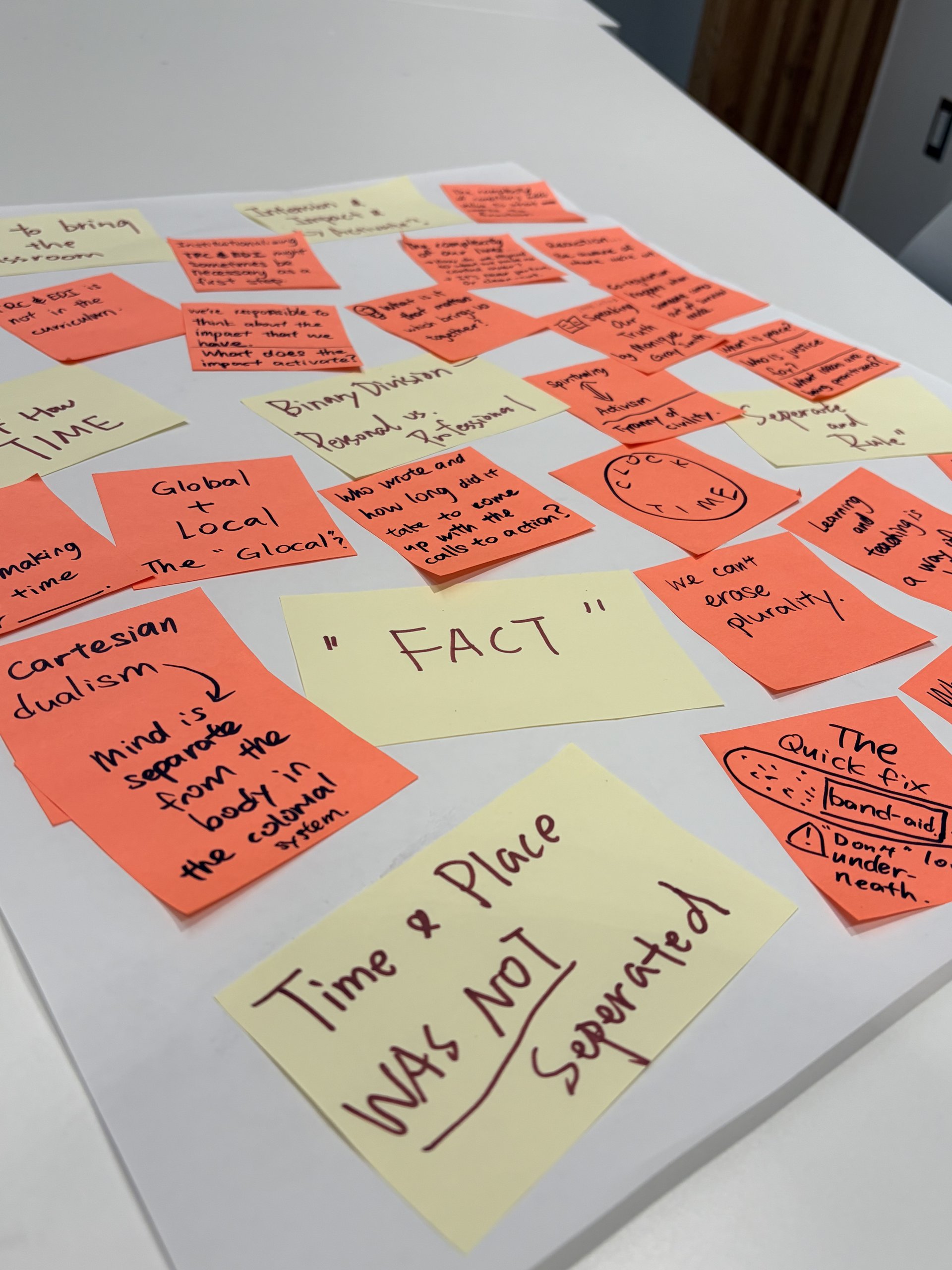
Participants reflected on the tension between intention and performativity in land acknowledgments. The discussion considered how certain practices, even when well-intended, may risk becoming symbolic or “feel-good” gestures if they are not accompanied by sustained action. At the same time, participants explored whether imperfect or evolving acknowledgments may still hold value when they open space for dialogue, reflection, and learning.
The conversation highlighted the importance of clarity of intention. Participants emphasized that land acknowledgments are not simply scripted statements, but invitations to engage with the histories, relationships, and ongoing responsibilities connected to the land. This includes recognizing how one’s presence and actions continue to shape those relationships over time.
Within educational contexts, participants discussed the responsibilities educators carry in guiding students through these conversations. Considerations included student readiness, the emotional and intellectual weight of the topic, and the importance of creating spaces where critical reflection can take place with care and respect. The group reflected on how land acknowledgments can become opportunities for deeper learning when they are thoughtfully integrated into teaching rather than treated as isolated moments.
Participants also shared reflections on the gap between words and actions. The discussion emphasized that meaningful acknowledgment requires alignment between what is said and how individuals and institutions behave. This includes approaching educational programming, particularly outdoor and land-based learning, with preparation, cultural sensitivity, and respect for Indigenous knowledge and protocols.
The conversation further explored how institutions might better support educators and students in this work. Participants reflected on the need for more consistent and comprehensive learning opportunities related to Indigenous histories, rights, and ways of knowing. Strengthening foundational understanding was seen as an important step toward more meaningful and informed engagement.
Throughout the Fireside Chat, several guiding ideas emerged, including respect, attention, intention, and embodiment. Participants emphasized that land acknowledgments are most meaningful when they are lived through ongoing actions and relationships rather than delivered as standalone statements.
The gathering concluded with a shared recognition that this work is ongoing. Participants expressed a commitment to continuing these conversations and to deepening their practice of engaging with land acknowledgments in ways that are thoughtful, relational, and accountable.